
Cropped Tee Samples: Define the Length Reference
Approve a cropped tee by defining where garment length starts, how the sample is laid out and which hem position the range needs. Record the selected size and front, side and back views. A single catalogue measurement or styled photograph does not establish a complete size specification, fibre composition or accepted tolerance for every ordered variant.
The word cropped leaves room for several interpretations. A supplier may measure the garment from one point while a buyer judges its position against a waistband. Those two references can disagree even when neither person has made an arithmetic mistake. When requesting a wholesale t-shirt sample from style 2568, use an explicit measurement reference and a short observation sheet to make the decision repeatable.
Mark the starting point on the garment
Draw or photograph the chosen measurement line and identify its starting point. State whether the sample is measured flat and relaxed, and distinguish the garment measurement from a body measurement. The purpose is to ensure that the supplier and reviewer use the same reference when discussing a length adjustment, rather than exchanging numbers that describe different places.
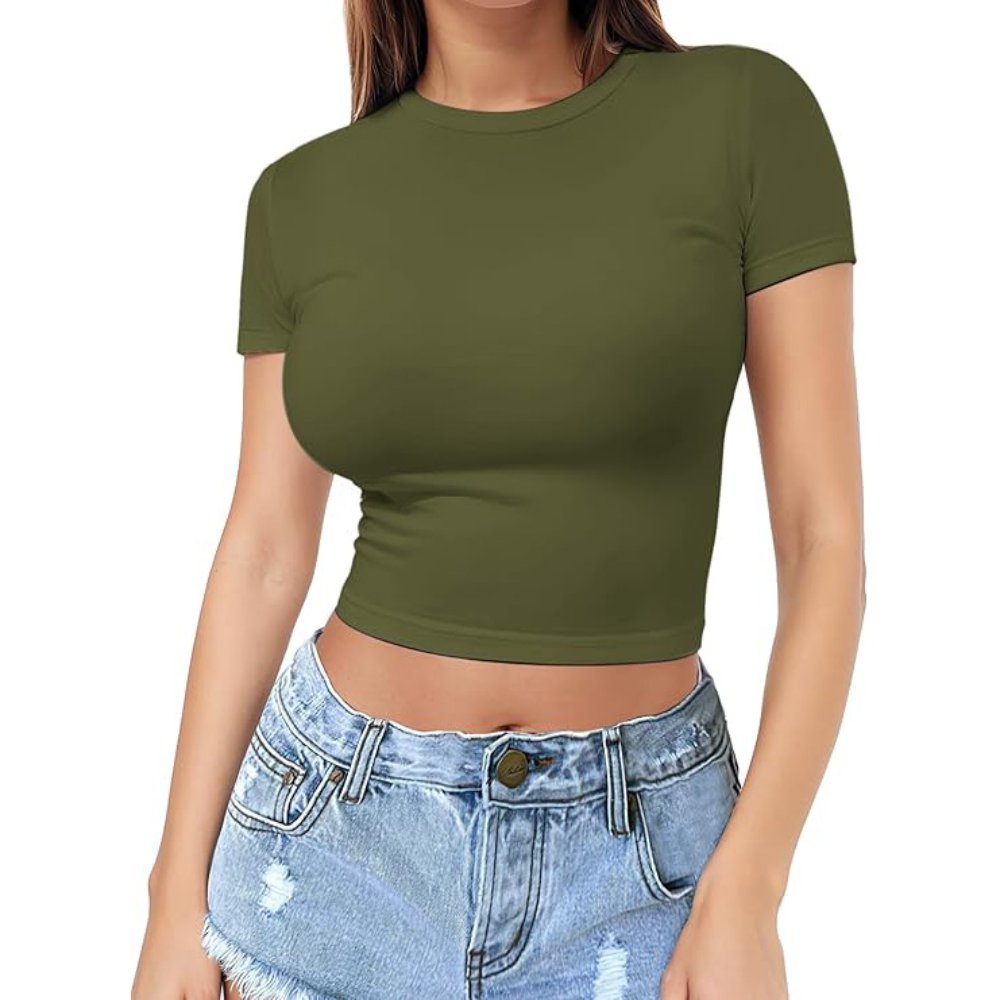
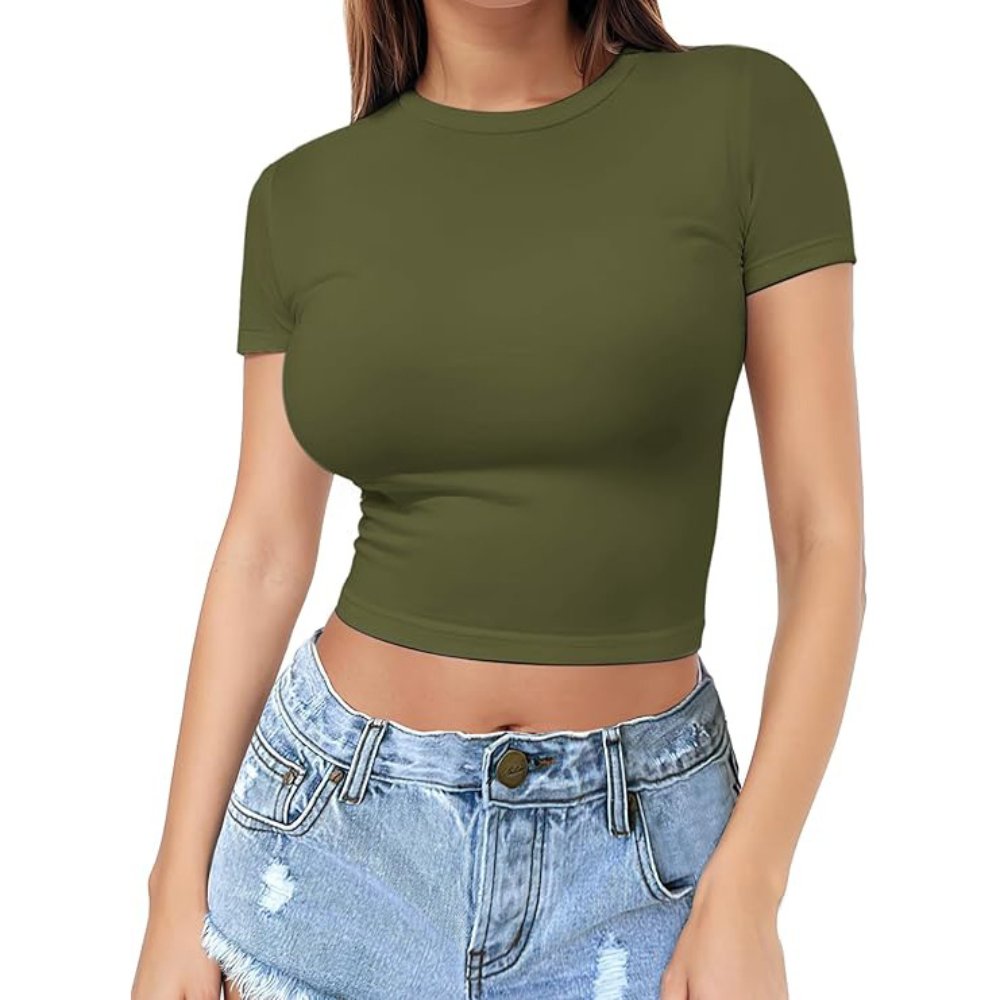
Yihui describes style 2568 as a round-neck, short-sleeve cropped tee and publishes an example for size S. Use that listing to identify the product, then request the measurement method and relevant information for the selected sample. An example for one size should not be extended into an invented grading rule for the whole range.
- Mark the garment-length starting point.
- Separate garment dimensions from body measurements.
- Keep fabric composition an explicit information request.
Review hem position as a separate decision
Compare the chosen sample with the intended lower garment and fit reference. Observe where the hem finishes from the front, side and back, then note the relationship in plain language. If the range needs a particular overlap, gap or proportion, mark that requirement instead of assuming that the model photograph communicates the buyer target precisely.
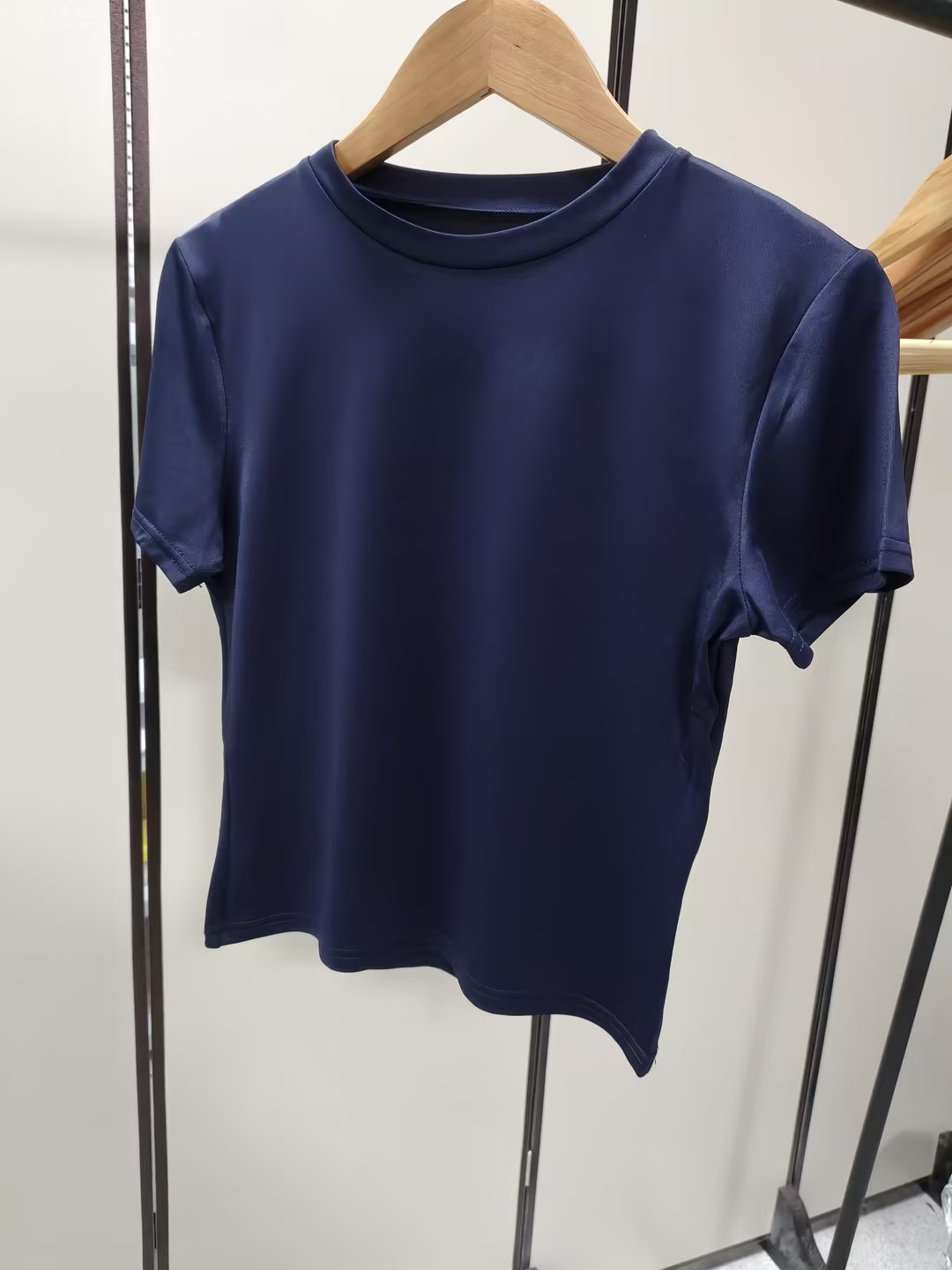
The catalogue includes a model view and a hanging garment view. Each helps identify visible shape, but neither replaces the physical sample decision. A styled waistline can influence how cropped length looks. Retain the actual sample size and viewing conditions so a later review can reproduce the comparison.
| Review item | Record with the sample | Question to resolve |
|---|---|---|
| Length | Starting point and measurement diagram | Are both teams measuring the same line? |
| Hem position | Selected size and outfit views | Does the sample match the intended proportion? |
| Construction | Marked neckline or sleeve detail | Which correction was accepted? |
| Fabric | Actual composition information | What can the product label accurately state? |
Keep neckline and sleeve comments traceable
Check the visible neckline edge, shoulder seam, sleeve opening and lower hem on the selected sample. Record the exact location of any requested correction and attach a marked image. Keep the comment tied to the sample reference; a general request for a neater finish gives the next reviewer little information about which feature was changed.
Ask the supplier to respond to each comment separately. If a neckline adjustment also changes the garment length starting point, update the diagram before comparing another sample. A corrected detail should not leave two measurement methods active in the approval file. Set the required acceptance criteria with the supplier rather than borrowing limits from another style.
Clarify the fabric name before writing retail copy
The product listing uses the term Milk Silk. Treat that wording as a catalogue description requiring clarification, not as a verified declaration that the fabric contains milk-derived fibre, silk or a particular fibre percentage. Request the actual composition and the information needed for the intended product description and garment label.
Keep visual appearance, hand-feel observations and fibre documentation as separate records. A reviewer can describe what the physical sample feels like without proving its composition or making a durability claim. If colour or material changes between variants, ask which sample and documentation apply before carrying one approval across the full order.
Close one sample record before extending the range
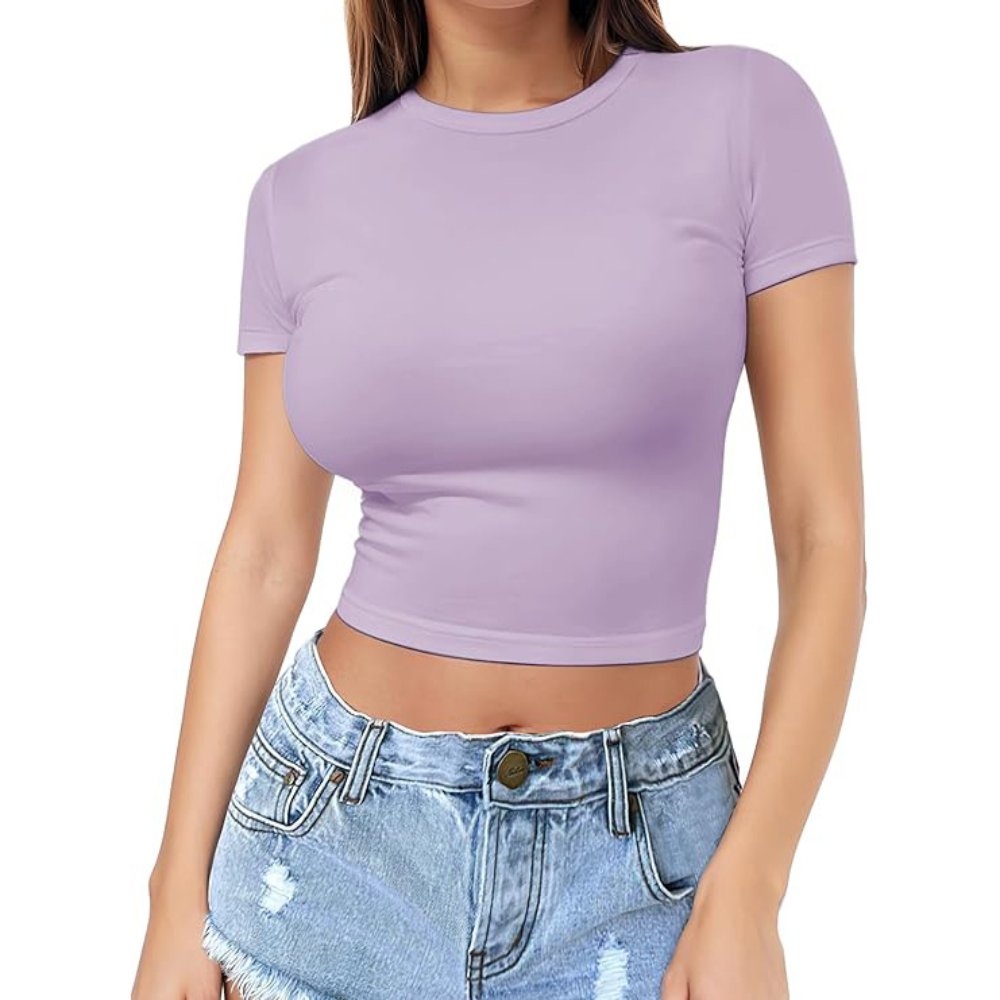
Collect the selected size, marked length diagram, hem-position photographs and resolved construction comments in one approval record. List the measurements and evidence still required for other selected sizes or colours. This prevents an accepted first sample from being treated as an unqualified approval of every possible garment variant.
Use the Yihui product catalogue to identify any additional style comparisons, while keeping each sample reference separate. A similar round neckline does not establish the same length, material or sizing. Ask for current supply options and commercial terms only after the garment request is clear enough for the supplier to recognise it.
Frequently Asked Questions
Does the published S measurement define all sizes?
No. Request the relevant measurement and grading information for the sizes being considered. Do not infer a full specification from one example.
Can Milk Silk be used as a fibre declaration?
Request the actual composition. The catalogue term alone does not establish fibre identity or percentage.
Is a model photo enough to approve cropped length?
Use it as a reference, then record the physical sample and intended hem position with a defined measurement method.
Should tolerances be copied from another tee?
Agree the required limits for this sample and order. A visually similar garment does not supply those acceptance criteria.
Send the marked length reference and unresolved questions through Yihui contact. Retain the accepted response with the sample identifier and use the blog archive for future buying notes as they are published.